Celebrating 250 Years of Lake Hartwell Country
As most Americans know, our country is approaching its 250th anniversary on July 4, 2026. Back on that date in 1776, the Founding Fathers formally adopted the Declaration of Independence, officially severing ties with Great Britain. Four delegates from South Carolina – Edward Rutledge, Thomas Heyward, Jr., Thomas Lynch, Jr., and Arthur Middleton – added their names to this monumental piece of parchment, and history was forever changed.
Though many imagine the Revolutionary War taking place along the Atlantic seaboard or up in the woods of New England, South Carolina and the “Southern Theater” of battle contributed their fair share of colonial victories. Battles here in the Upstate, including the Battle of Kings Mountain and the Battle of Cowpens, are considered major turning points toward weakening British control of the South. Many residents of Lake Hartwell Country contributed to the war effort, and you can still see their legacies today across our three counties.
Historic Cemeteries
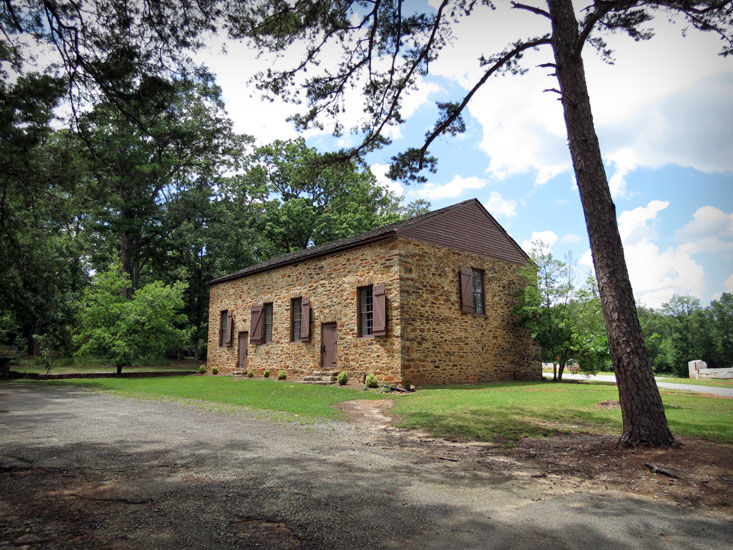
While a trip to a graveyard may not be your average afternoon outing, historic cemeteries across Lake Hartwell Country are the final resting places of many notable Revolutionary War veterans and well worth a visit. Old Stone Church, just outside of Clemson, is a beautifully preserved building with centuries of history. Among those buried in the churchyard are Andrew Pickens and Robert Anderson. During the Revolutionary War, Pickens quickly rose to the rank of brigadier general in the South Carolina militia, earning an underdog victory in the Battle of Kettle Creek and participating in other notable battles. He later became a member of the U.S. House of Representatives. Meanwhile, Anderson became a captain and then a colonel under Pickens’ leadership, fighting alongside him against the British as well as the Cherokees. After the war, he became a brigadier general in the state militia and served in the South Carolina House of Representatives. These two notable commanders also gave their names to two of the counties that comprise Lake Hartwell Country!
You can also visit other historic, public cemeteries: Old Pickens Cemetery was established in 1785 behind the Pickens Chapel Church near Easley. Between 25-30 Revolutionary War soldiers are buried here, including Captain Robert Pickens. The Old Hopewell Cemetery in Anderson is denoted by a historical marker and may take a little hiking to find, but it’s well worth it: graves spanning several American wars are located here.
Notable Homes
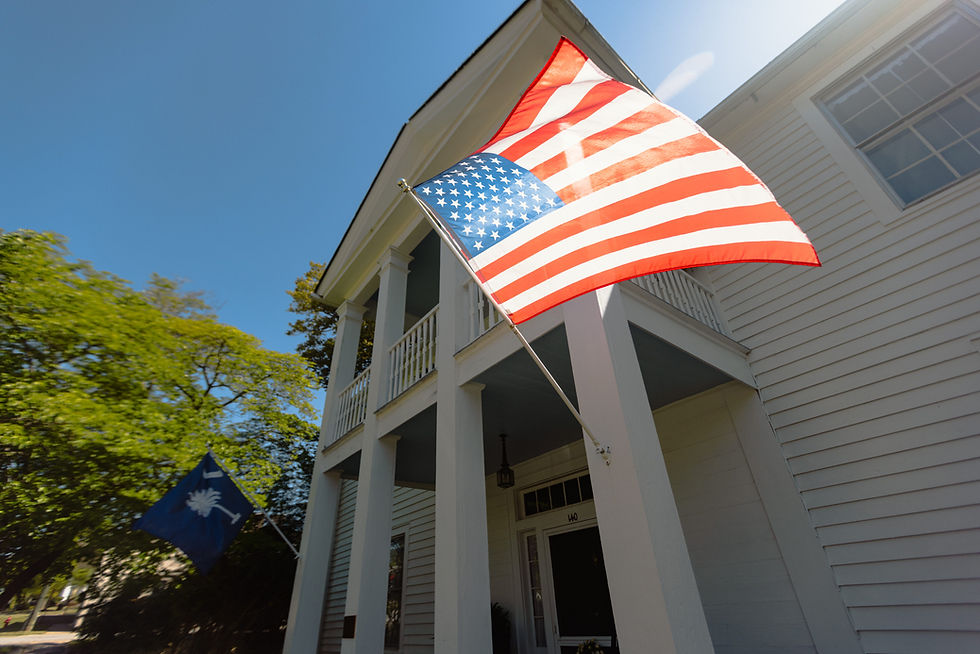
Leaders like Pickens and Anderson fought to protect colonists’ new home here in the United States, and some of these historic homes still stand today. The Historic Hanover House was built in 1716 in the South Carolina Lowcountry. When construction began on Lake Moultrie in the 1940s, the house became endangered and was moved more than 250 miles northwest to Clemson University. It now stands in the South Carolina Botanical Garden as a museum: a two-pronged testament to early French Huguenot colonial architecture as well as its darker past as a slaveholding rice plantation.
Another historic destination on Clemson’s campus is the Hopewell House, home to Pickens’ son, Governor Andrew Pickens, Jr. General Pickens built the first structure on this site around 1785, a simple log cabin where the Hopewell Treaties were signed between the United States and the Cherokee, Choctaw, and Chickasaw tribes who lived on the land nearby. The current house was constructed circa 1815 and, sadly, became one of the largest slaveholding sites in what was then known as the Pendleton District.

Educational Sites
Oconee Station State Historic Site is one of seven state parks here in Lake Hartwell Country, and this park commemorates the wild western edge of South Carolina back in the days of the early colonists. The outpost was used as a military base for the South Carolina state militia, a peaceful trading post to meet and mingle, and even a private residence. With structures built in 1792 and 1805, the park commemorates Revolutionary-era life on the frontier and allows you to walk in the footsteps of soldiers, traders, and settlers.
Lastly, the Anderson County Museum greets you with a bang before you even venture inside: the Old Reformer Cannon, one of the oldest artifacts in the Upstate, is a six-pounder thought to have been built in the 1760s. Though its exact story is uncertain, it is believed to have been used in both the Revolutionary War and War of 1812. When you venture into the free museum, make sure to explore the permanent exhibit named “Andersonians in War.” From the Revolutionary War through modern times, this tribute shows what local soldiers endured during their time fighting for our country and shares their stories. It is a truly inspirational, yet sobering, exhibit.

In the 250 years since our Founding Fathers put quill to paper, the United States and South Carolina have both experienced drastic changes and astronomical growth. Yet the land that makes up Lake Hartwell Country has remained beautiful, wild, and appealing even as it has developed and altered. Celebrate the 250th anniversary of our country – and Lake Hartwell Country! – with a trip to some of these impactful historic sites.
